
Learning Outcomes
- LST-11-01: Describes legal principles and judicial processes used in the legal system
- LST-11-02: Explains the key features of Australian and international law
- LST-11-03: Explains the role, formation and reform of law
- LST-11-04: Analyses differing perspectives of individuals, groups and society in influencing the law
- LST-11-05: Explains methods to resolve conflict and encourage cooperation between individuals, groups and nation-states
- LST-11-06: Analyses legal issues to determine the extent to which the law achieves justice for individuals, groups and society
- LST-11-07: Uses and analyses a range of sources to assess the effectiveness of the law in addressing issues
- LST-11-08: Uses legal concepts to communicate information and legal reasoning to form a judgement
- LAC-LS-03: Identifies rules and laws for individuals and groups
- LAC-LS-04: Describes the purpose and application of laws for specific contexts
- LAC-LS-05: Examines ways that laws are made and changed
- LAC-LS-12: Communicates ideas and information about the law and community
The Legal Studies and the Legislature programs at the Parliament of NSW are based on Legal Studies 11–12 Syllabus 2025, implementation 2027.
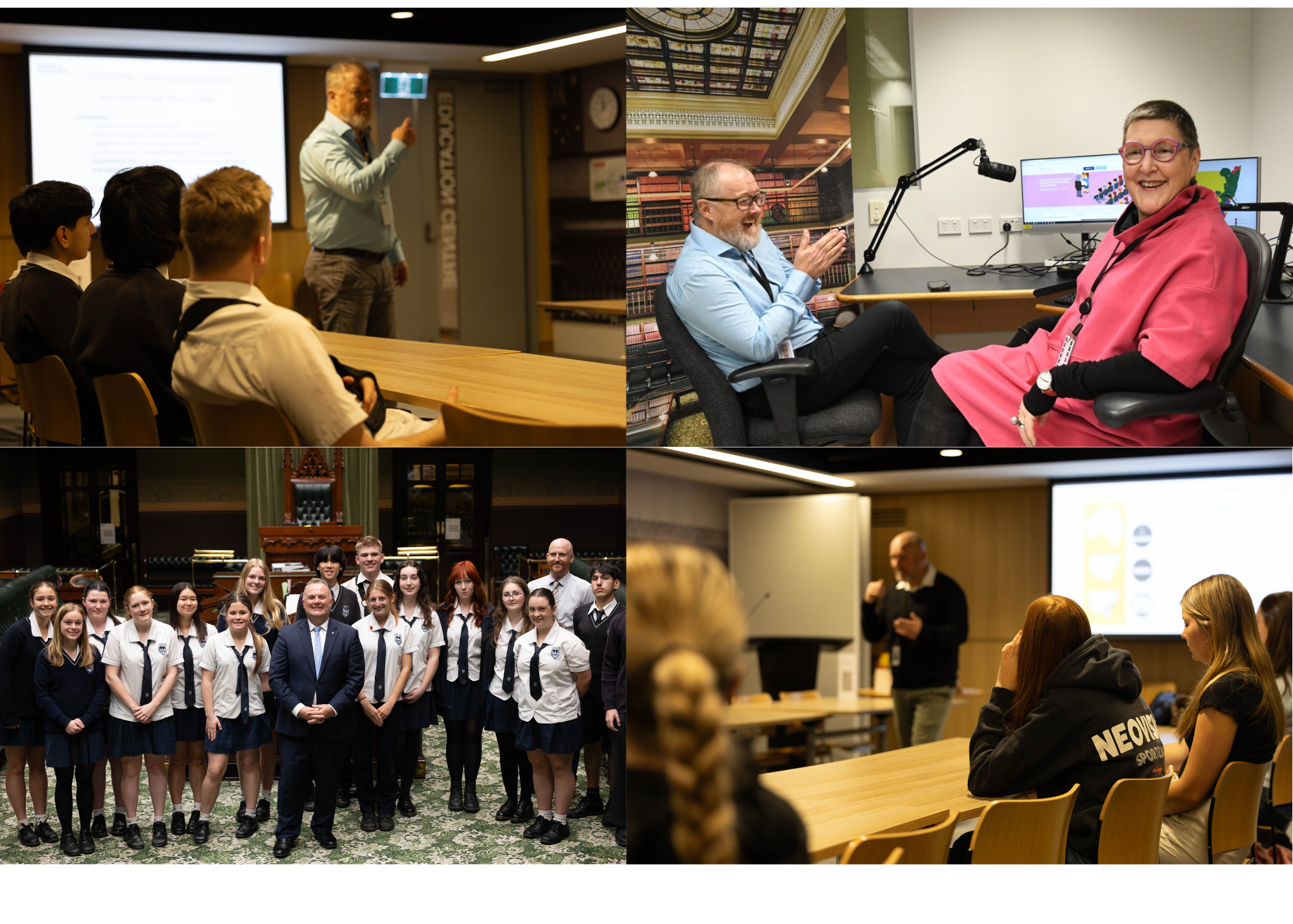
On a sitting day (members are in the chamber), students participate in a workshop and visit the Legislative Assembly and Legislative Council Chambers, observing the Parliament in action and, where possible, meet their member.
On non-sitting days (members are not present in the chamber), students participate in a 90-minute workshop and a 30-minute visit to the Legislative Assembly and the Legislative Council chambers including an introduction to the spaces and a role-play in the chambers.
Additionally, a video conference is available via Teams or ZOOM at a time suitable to the teacher between 8:30 am and 2:30 pm, during the school term.
Maximum group size: 50; please see below for eligible dates. Booking enquiry link here.
Syllabus Links
Legal Studies 11–12 Syllabus 2025, implementation 2027
OBJECTIVE
Students develop knowledge and understanding of legal concepts and structures, the meaning and purpose of justice, and the legal issues that affect individuals, groups and society.
TOPIC: Investigating the law
Legal foundations
- The meaning and function of the law
- Characteristics of effective law
- Ways to classify the law, including binding or non-binding, written or unwritten, public or private, criminal or civil, common or statute, and domestic or international
- Principles of justice, including equality, access and fairness
- The relationship between ethics and the law
- Principles of procedural fairness, including a fair hearing and rules against bias
- The rule of law and its importance to individuals, groups, government and society
- Consequences of an absence of law or a misuse of law
Sources of law
- The origin and development of common law in Australia
- Features of the doctrine of precedent and its application in law
- Statute law and the steps in the legislative process
- The role and types of delegated legislation
Legal institutions
- The role, jurisdiction and hierarchy of courts in NSW and Australia
- The purpose of specialist courts, including the Children’s Court and the Coroner’s Court
- Features of the adversarial system
- The role and structure of parliament in NSW and Australia
- The relationship between courts and parliament
The constitutional framework
- The creation and function of the Australian Constitution
- The division of powers between federal, state and territory governments
- Reasons for the separation of powers
- The role of the High Court in interpreting the Constitution
- Amending the Constitution through referendums
Legal rights
- The relationship between the rights and responsibilities of individuals
- Sources of rights derived from the Australian Constitution, statute law, common law and international law
- Domestic and international protection of rights
- Consequences of a breach of rights
Life Skills
TOPIC: Changing the law
- The recognition of land rights in NSW and native title for Aboriginal and Torres Strait Islander Peoples
- Study of one other case study of law reform selected from NSW or the federal level
About This Program
Program options
| Program | Times | Content |
| Legal Studies and the Legislature on a sitting day. (Recommended) 120 mins |
Tuesday: 10:30am; 1pm Wednesday and Thursday: 10am; 1pm |
Program presentation, observation of Question Time and chat with member (schedules allowing) |
| Legal Studies and the Legislature on a non-sitting day. (Subject to availability) 120 mins |
Weekdays from 9am (programs can be tailored to suit most start times; please enquire) |
Seminar, Case study Role Play, tour of the House Chambers |
| Legal Studies and the Legislature Videoconference (Teams or ZOOM) 60-120 mins |
Weekdays from 9am (Programs can be tailored to most start times; please enquire) |
Interactive online program, Q&A, case study. |
How Can I Book?
Please consult the Sitting Day Calendar (2026) for a complete list of dates.
During sitting weeks, Parliament sits on Tuesday, Wednesday and Thursday; some Fridays are sitting days for the Legislative Assembly as well.
|
Question Time |
|
|
Legislative Assembly |
Legislative Council |
|
Legislative Assembly and Legislative Council |
|
Bookings are essential.
STAGE 6 PROGRAM BOOKING

- Please call us 0437 240 869 or
- Email us dps.education@parliament.nsw.gov.au
- Regional, remote and rural schools (in electorates more than 120km from the Parliament of NSW) may be eligible for a travel subsidy. Click here to check your eligibility.
Other Helpful Resources
- Please see our SAFETY Advice – Risk Assessment July 2024
- What to expect when I visit the Parliament of NSW