Learning Outcomes
- HS3-ACH-01: Describes Aboriginal Knowledges and Practices that care for Country and the importance of Aboriginal Languages revival
- HS3-CWT-01: Creates written texts to communicate ideas and understanding about people, places and events of the past and the present
Syllabus Links
K–6 Human Society and its Environment K–6 Syllabus (2024, implementation 2027)
Topic: Stage 3 – Historical sources present perspectives on the past
Focus: Aboriginal Peoples have diverse Languages
CORE CONTENT
- Investigate Aboriginal Languages in the local area and across NSW and make connections to the meanings and origins of words used in Standard Australian English
- Describe the role of Aboriginal Knowledge Holders in revitalising and maintaining Aboriginal Languages
- Describe the ways Aboriginal Peoples’ Languages and Oral Traditions of song, dance and story were disrupted by European settlement
- Explain how Aboriginal Peoples celebrate and share Aboriginal Languages and Cultural Practices in a contemporary world
STAGE 3 - Parliament of NSW Message Stick
LESSON INTRODUCTION
The Legislative Council chamber is home to this particular message stick, which was presented by Aboriginal language practitioners during the ceremonies surrounding the introduction of the Aboriginal Languages Bill 2017. The bill acknowledged that Aboriginal languages are part of an Aboriginal person’s culture and identity and established an Aboriginal Languages Trust to coordinate and resource Aboriginal language activities to ‘reawaken, nurture and grow Aboriginal languages’. This legislation was the first of its kind in Australia.
To mark the significance of the introduction of this groundbreaking legislation, a number of unique and unprecedented procedures were adopted, including a smoking ceremony in the Parliament’s forecourt and a message stick ceremony in the chamber, conducted by a number of elders and representatives of different Aboriginal language groups. The message stick was passed from speaker to speaker before being given to the Minister for Aboriginal Affairs, the Honourable Sarah Mitchell. Elders Uncle Gary Williams and Aunty Irene Harrington were invited to take seats on the dais next to the President.
During her speech on the bill, Minister Mitchell invited Dr Ray Kelly to speak, the first time a non-member was allowed to address the House during formal proceedings, or speak in language.
The message stick accompanied the bill on its journey through both Houses and was placed on the Table every time the bill was debated. After the bill passed both Houses, the message stick remained with the Legislative Council and members resolved that it be displayed permanently in the chamber. They also agreed that during special occasions such as the opening of Parliament, the message stick be removed by an Aboriginal elder who will address the House in language before the message stick is placed on the Table. The message stick serves as a physical reminder of the aims of the legislation, symbolising the Aboriginal languages spoken in New South Wales.
The message stick was created by Sheldon Harrington of the Bundjalung Nation.
Watch the video to hear about the significance of the message stick in the Legislative Council and the ceremony which took place to present it to Parliament after the Bill was passed.
STUDENT QUESTIONS
- What is a message stick?
- When as it first used and how?
- What is its significance in the Parliament of NSW today?
Did you know that a message stick is a form of communication between Aboriginal nations, clans and language groups, used to pass on or share a message from one community to another?

Read more about the message stick here
TASK
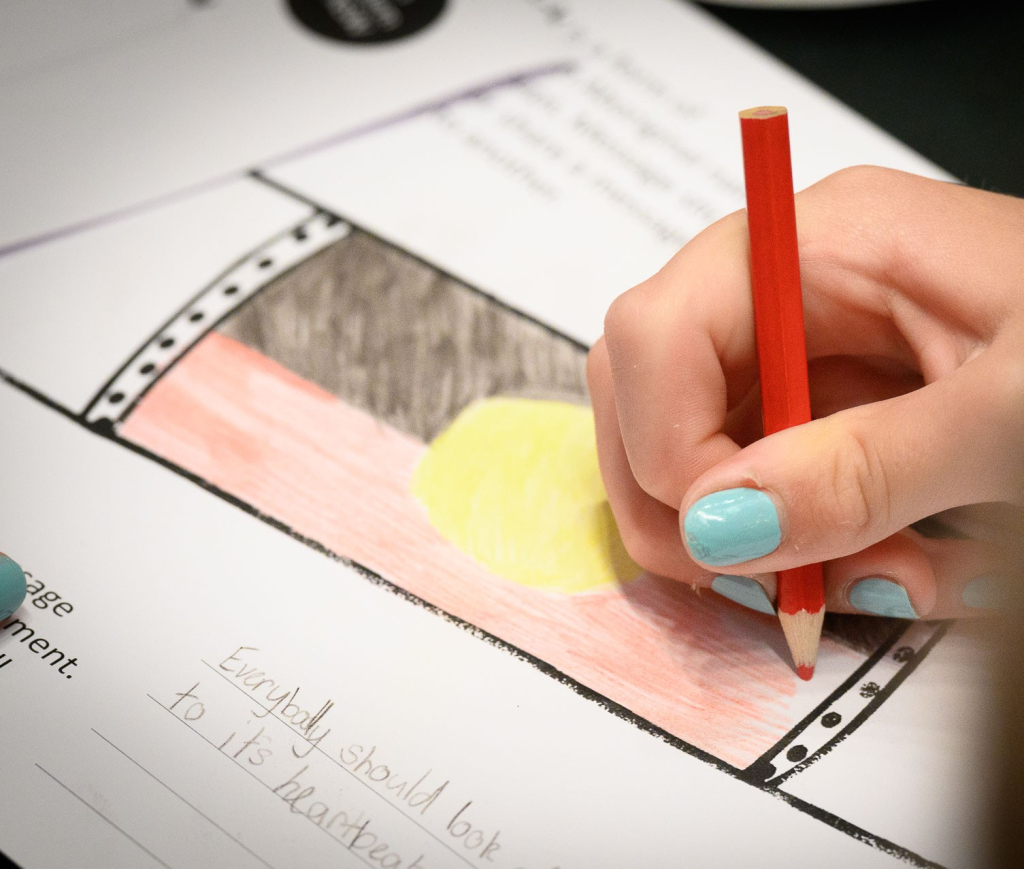
Using the provided worksheet, students can design their own message stick and write a curator’s statement (approx. 300 words) explaining its purpose.
Requirements:
- Design: Incorporate symbols representing reconciliation or an obligation to Country.
- Statement: Describe the traditional Knowledges and Practices used, and compare the role of the message stick in the past versus a modern context.
Teacher Checklist:
- Identifies the message stick as a communication tool.
- Uses clear, written text to communicate cultural ideas (HS3-CWT-01).
- Reflects understanding of Aboriginal cultural symbols and reconciliation.
DIFFERENTIATION
Basic
Complete a Cloze Passage Curator Statement
Instead of a 300-word free-write, provide a scaffolded template with sentence starters and key vocabulary words (e.g., “My message stick represents…”, “Language is important because…”) to help students to structure their ideas.
Extension
Create a Language Revitalisation Plan
Research the role of the Aboriginal Languages Trust and draft a proposal for your school to “reawaken” the local Aboriginal language in your own community, including signage, greetings, or assembly protocols.